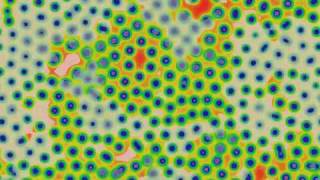
Gray Scott F220 k590 fr35
89 views (2014-10-02)Upload date: 2009-03-17⏱ 2:01👍 1 · 👎 0Science & Technology
Status on YouTube
not checked
not checked yet
In the archive: 2012-03-04 – 2014-10-02.
Sources: Common Crawl 2012 · Web Archive – pages captured in 2013 · Web Archive – pages captured in 2014
Download the statistics: CSV · JSON
Sources: Common Crawl 2012 · Web Archive – pages captured in 2013 · Web Archive – pages captured in 2014
Download the statistics: CSV · JSON
Appeared on
Listed 41 times in captured pages, on 21 different lists (suggested videos, channels, playlists…). Earliest first:
- Suggested next to: Gray-Scott-F600-k620-fr147.mp4 · capture of 2012-03-04 · CC-MAIN-2012 · nearest Wayback copy
- Suggested next to: Gray Scott F060 k310 fr19 · capture of 2013-07-02 · this capture in the Wayback Machine
- Suggested next to: Gray Scott F740 k670 fr252 · capture of 2014-01-02 · this capture in the Wayback Machine
- Suggested next to: original discovery of u-shaped moving pattern · capture of 2014-01-02 · this capture in the Wayback Machine
- Suggested next to: Gray Scott F220 k550 fr35 · capture of 2014-04-02 · this capture in the Wayback Machine
- Suggested next to: Gray Scott F340 k710 fr20 · capture of 2014-04-03 · this capture in the Wayback Machine
- Suggested next to: Gray Scott F300 k710 fr20 · capture of 2014-04-03 · this capture in the Wayback Machine
- Suggested next to: Gray Scott F860 k610 fr399 · capture of 2014-04-03 · this capture in the Wayback Machine
- Suggested next to: Gray Scott F860 k590 fr399 · capture of 2014-04-03 · this capture in the Wayback Machine
- Suggested next to: Gray Scott F260 k590 fr40 · capture of 2014-04-03 · this capture in the Wayback Machine
Description
Unstable spot solitons: After filling the space, they begin to crowd
each other out. Cells continually die, and new ones are born to fill
the space thus vacated.
each other out. Cells continually die, and new ones are born to fill
the space thus vacated.
Tags
View history
watch pagelist (suggested, channel, search…)
Captures with a view count: 10 (the watch page and the lists that showed the video).
Archive captures (8)
| Captured | Source | Captured URL | Status | Views | Likes / dislikes |
|---|---|---|---|---|---|
| 2014-10-02 | Web Archive – pages captured in 2014 | youtube.com/watch?v=zEfHTFFajPg | available | 89 | |
| 2014-07-03 | Web Archive – pages captured in 2014 | youtube.com/watch?v=zEfHTFFajPg | available | 1 / 0 | |
| 2014-04-02 | Web Archive – pages captured in 2014 | youtube.com/watch?v=zEfHTFFajPg | available | 87 | 1 / 0 |
| 2014-01-02 | Web Archive – pages captured in 2014 | youtube.com/watch?v=zEfHTFFajPg | available | 82 | 0 / 0 |
| 2013-10-02 | Web Archive – pages captured in 2013 | youtube.com/watch?v=zEfHTFFajPg | available | 76 | 0 / 0 |
| 2013-07-02 | Web Archive – pages captured in 2013 | youtube.com/watch?v=zEfHTFFajPg | available | 76 | 0 / 0 |
| 2013-04-02 | Web Archive – pages captured in 2013 | youtube.com/watch?v=zEfHTFFajPg | available | 75 | 0 / 0 |
| 2013-01-02 | Web Archive – pages captured in 2013 | youtube.com/watch?v=zEfHTFFajPg | available | 72 |
The captured URL is the exact address of the page when it was captured, country host and parameters included. For Common Crawl it opens the record in that crawl's index (WARC file and offset), and the HTML button downloads the page's original code from Common Crawl. For the Web Archive it opens that very capture in the Wayback Machine. The date of a Common Crawl capture opens the nearest Wayback copy of the page.